
Understanding Saudi Arabia Work Visa for Pakistanis
Saudi Arabia has long been a top destination for Pakistani workers seeking better career opportunities and a stable income. With the Kingdom’s Vision 2030 development plan accelerating mega projects in construction, oil and gas, healthcare, hospitality, and IT, demand for skilled and semi-skilled labor remains high. In 2025, Saudi Arabia’s doors are still open to Pakistani citizens, offering thousands of new jobs each year — but securing a position starts with understanding the work visa process.
Why the Saudi Work Visa Matters?
A work visa is more than just an entry permit — it’s your legal authorization to live and work in the Kingdom. Without it, you can’t obtain an iqama (residency permit), open a bank account, or even rent a home. While there are several visa categories in Saudi Arabia, employment visas are the most sought after by Pakistanis. These include the standard employment visa for workers hired directly by Saudi companies, project-based visas for specific assignments, temporary work visas that can be as short as six months, and the so-called Azad visa (or “free visa”) that offers flexibility to choose employers — although this type should be approached carefully, as it is not fully recognized under Saudi labor laws.
Eligibility for Pakistanis in 2025
The good news is that in 2025, Saudi Arabia continues to hire Pakistani workers across many industries. The general age limit for a work visa is between 21 and 50 years, though certain professions or highly skilled positions may allow exceptions. The process requires a valid job offer from a Saudi employer — there’s no legal way to obtain a work visa without sponsorship.
Some Pakistanis wonder whether they can use the Saudi e-visa for work purposes. While the e-visa is available to Pakistani citizens for tourism and business visits, employment requires a standard work visa issued through the Saudi Embassy in Pakistan. This distinction is important, as working on a tourist visa is illegal and can lead to fines or deportation.
Documents and Requirements
To apply for a Saudi work visa from Pakistan, you’ll need a valid passport with at least six months’ validity, a signed employment contract, a visa authorization number obtained by your employer from the Saudi Ministry of Labor and Ministry of Foreign Affairs, a GCC-approved medical certificate showing you’re fit for work, and attested academic or professional qualifications if your role requires them. A police clearance certificate is also mandatory in most cases.
Once in Saudi Arabia, your employer will help you obtain an iqama, the national residency ID that proves you are legally employed and living in the country. This card is essential for almost every aspect of daily life, from setting up a mobile phone plan to receiving healthcare.
The Application Process Step-by-Step
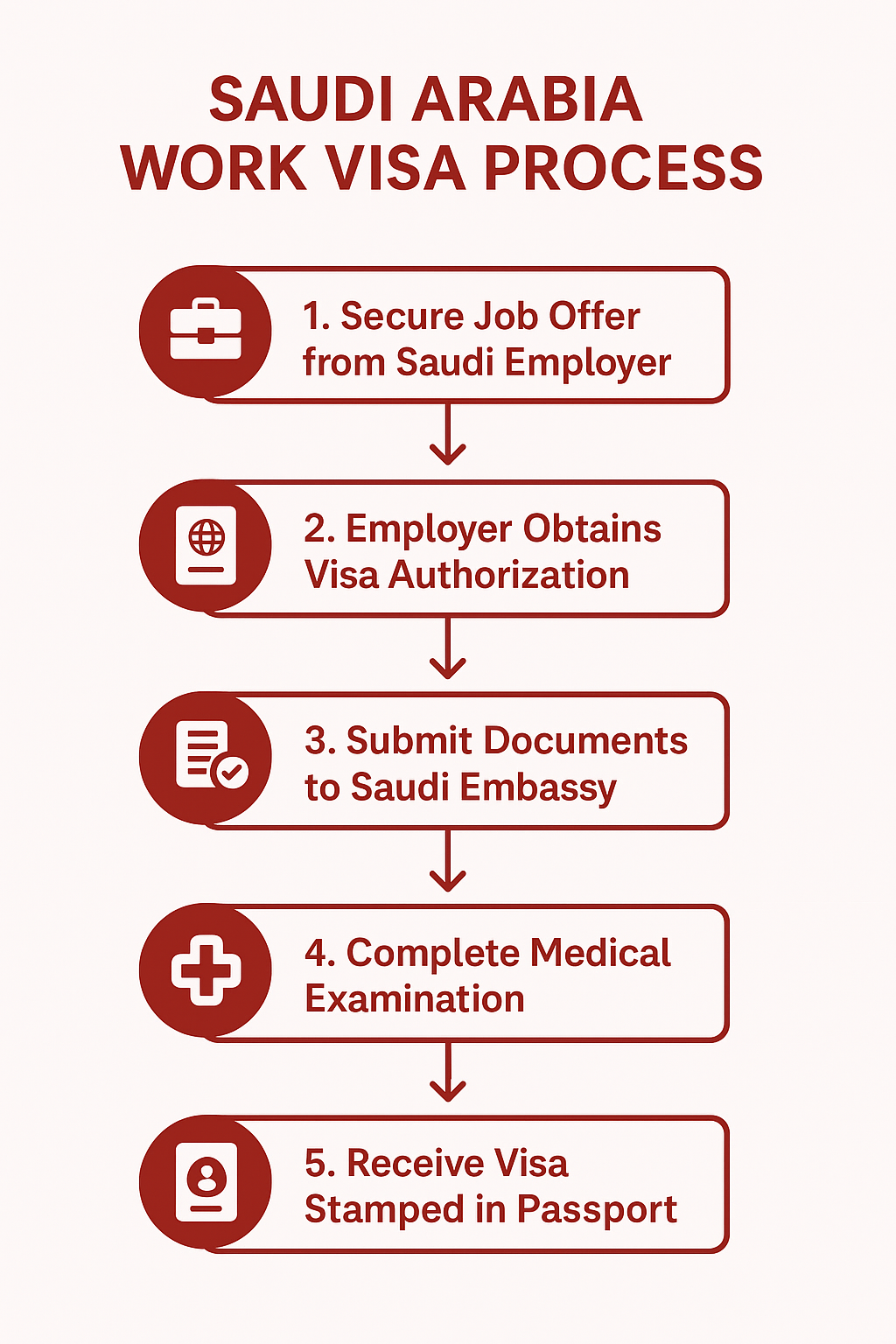
The journey starts in Pakistan with securing a job offer from a licensed Saudi employer. The employer then applies for visa authorization in Saudi Arabia, which is sent to the Saudi Embassy in Pakistan. With this authorization, you submit your documents through an approved recruitment agency, complete your medical examination, and wait for the embassy to stamp the visa in your passport.
Processing times vary but usually take two to six weeks depending on document readiness and embassy workload. Although technically possible to travel to Saudi Arabia from Pakistan by road, it involves multiple country transits and visas, making air travel the far more practical and common choice.
Costs to Expect
The cost of obtaining a Saudi work visa in Pakistan depends on your profession, the agency you use, and any additional services required. In most cases, you’ll pay embassy fees of around PKR 50,000–80,000, medical test fees of PKR 7,000–15,000, and document attestation costs of PKR 10,000–20,000. Recruitment agency service charges can range from PKR 150,000–300,000 or more, depending on the role and sector. These figures can fluctuate, so always confirm costs with your agency before committing.
Finding a Job Before Applying
The easiest and safest way to secure a Saudi work visa is to land a job first. Many Pakistani job seekers use POEPA-licensed recruitment agencies like Khawaja Manpower International or apply through online platforms like Bayt, GulfTalent, and Naukrigulf. Networking with friends and relatives already in Saudi Arabia can also open doors.
Jobs for Pakistanis span a wide range, from labor roles in construction to high-paying positions in engineering, healthcare, and IT. Salaries can vary dramatically — unskilled workers might earn SAR 1,200–1,800 per month, while experienced professionals can command SAR 8,000–15,000 or more.
When choosing where to work, consider cities like Riyadh (for administration and finance roles), Jeddah (trade, logistics, and hospitality), and Dammam or Al Khobar (oil, gas, and petrochemicals). Saudi Arabia’s job market is competitive, but for qualified candidates with relevant skills, opportunities are plentiful.
Life and Work in the Kingdom
Saudi Arabia offers several advantages to Pakistani workers: tax-free income, relatively low living costs outside major cities, and a huge expatriate community for social support. Over two million Pakistanis currently live and work in the Kingdom, making it one of the largest expat groups.
While Saudi Arabia is a strong choice for employment, some Pakistanis also look to Dubai and other Gulf states. The UAE continues to offer work visas to Pakistani citizens, but the process differs, and the cost of living is generally higher.
Special Notes on Visa Types
A growing number of workers are interested in temporary or short-term visas, particularly the six-month work visa that Saudi Arabia occasionally issues for specific projects. These are useful for contract work but don’t offer the same stability as a long-term employment visa. The Azad visa, on the other hand, appeals to those who want to choose their own employers after arrival, but because it often bypasses official sponsorship systems, it carries legal and job security risks.
Tips for a Smooth Experience
To avoid problems, only work with agencies registered on the Bureau of Emigration & Overseas Employment (BEOE) website. Never pay the full fee before the visa is issued, and always read your contract carefully. Keep in mind that Saudi nationality is almost never granted to foreign workers, so your goal should be to maximize your employment experience and savings during your time in the Kingdom.
Conclusion
For Pakistanis in 2025, Saudi Arabia remains a land of opportunity — but success starts with understanding the visa process inside out. From knowing the types of work visas available to preparing the right documents, budgeting for costs, and choosing a reliable recruitment partner for Saudi Arabia in Pakistan, every step matters. Done right, securing a Saudi work visa can open the door to a rewarding career, a steady income, and valuable international experience.
Make Hiring in Saudi Arabia Simple
Skip the stress of navigating work visa rules and recruitment hurdles. Let our experts handle every step — from talent search to visa approval — so you can focus on growing your business.
Contact us today and start building your dream team in Saudi Arabia!
FAQ
Q1. What is the age limit for a Saudi work visa?
Typically 21–50 years, though some employers may extend limits for specialized roles.
Q2. How long does a Saudi visa take to process?
Usually 2–6 weeks.
Q3. How much is the visa fee for Pakistan?
Between PKR 50,000–80,000 (excluding other costs).
Q4. Can I get Saudi nationality from Pakistan?
Saudi nationality is rarely granted to foreigners; it usually requires exceptional service to the country.
Q5. How to apply for a Saudi work visa?
Through a Saudi employer’s sponsorship and an authorized recruitment agency in Pakistan.
